
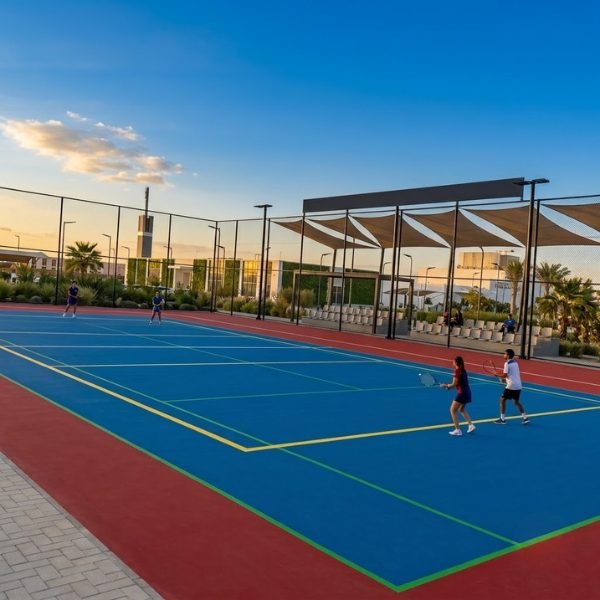
Tennis & Acrylic Courts
Multi-layer acrylic systems for tennis, basketball and volleyball with consistent ball response.
Balanced acrylic surfaces for more consistent play
Acrylic court quality depends on base preparation, uniform application, surface texture and marking. Cracks, falls and moisture should be assessed before selecting a build-up that fits the sport, desired pace and comfort requirements.
Across the UAE, exposure, drainage, operating hours and access constraints can differ substantially between sites. We review these conditions alongside the intended users and lifecycle needs, so the specification is appropriate to the location rather than a copied material list.
Scope of work
- Multi-layer acrylic surfacing
- Optional cushioned layer
- UV and moisture resistance
- ITF-standard court marking
The right solution, not one solution for everyone
Standard acrylic
Resurfacer, coloured coatings and line marking are matched to a sound base and intended use.
Cushioned system
Additional resilient layers where greater comfort is specified, subject to compatibility with the base.
Existing court resurfacing
Local repairs and new coatings follow adhesion and crack assessment rather than simply covering defects.
Engineering details that make the difference
Base preparation
Assess cracks, levels, moisture and surface evenness.
Surface texture
Control material grading and application rates for consistent texture and response.
Marking & colour
Coordinate court colours and sport lines with protected edges.
From site assessment to handover and operation
- 01
Assess the site and brief
Review dimensions, access, ground conditions and services, then discuss intended use and operational priorities to define a realistic scope.
- 02
Design and select the system
Coordinate layout, levels, surfaces, equipment, lighting and drainage. Explain technical options before approving materials and quantities.
- 03
Prepare the site and base
Protect existing areas and organise access, then undertake base preparation, civil works and drainage to the approved drawings.
- 04
Install systems and equipment
Follow the specified application sequence and manufacturer guidance, checking site conditions and interfaces between surfaces, equipment and services.
- 05
Inspect and close observations
Review surfaces, junctions, fixings, markings and equipment operation. Record and resolve observations before acceptance.
- 06
Handover and plan care
Provide agreed documentation and operating, cleaning and maintenance guidance. Clarify use limits, warranty terms and follow-up arrangements in the contract.
What do we review before handover?
Material conformity
Review system and material data against approved project specifications and check storage conditions before application.
Installation consistency
Monitor base readiness, layer uniformity, seams and edges. Resolve defects before covering them with subsequent layers.
User safety
Inspect fixings, edges, transitions and safety zones, and check equipment within its specified operating limits.
Clear documentation
Provide agreed care instructions, technical information and warranties. Independent certificates or testing are included when specified in the scope.
Protect your facility’s value after installation
Remove dust and leaves, clean stains with suitable products and monitor cracks and ponding.
Care frequency depends on use intensity, exposure and manufacturer instructions. Keep a record of inspections and repairs, use compatible cleaning methods and restrict access to damaged areas until assessed. Corrective work should address the cause, not only the visible defect.
Maintenance & renovationWhat determines the scope and cost?
Area and site condition
Cost is not determined by surface area alone. Removal, grading, base strengthening and site access can change the construction scope.
System and equipment level
Materials and quantities depend on surfacing, equipment, fencing, lighting, drainage and specified performance requirements.
Operations and testing
Phased work at a live venue, independent testing and additional documentation requirements affect the programme and scope.
Information for a clear proposal
- Project location, area and dimensions
- Intended use and expected user numbers
- Site photographs or available drawings
- Condition of the base and existing services
- Target completion and operating requirements
From playing surfaces to the surrounding details
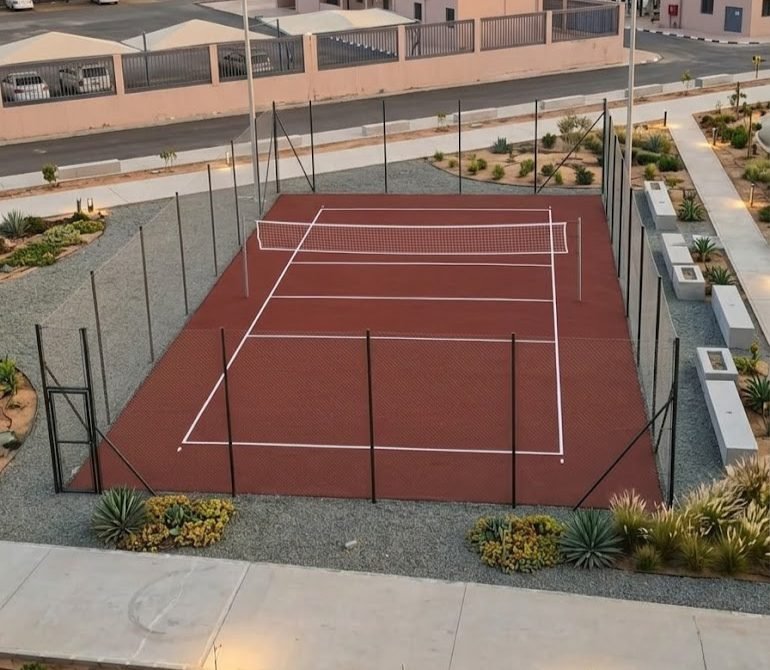
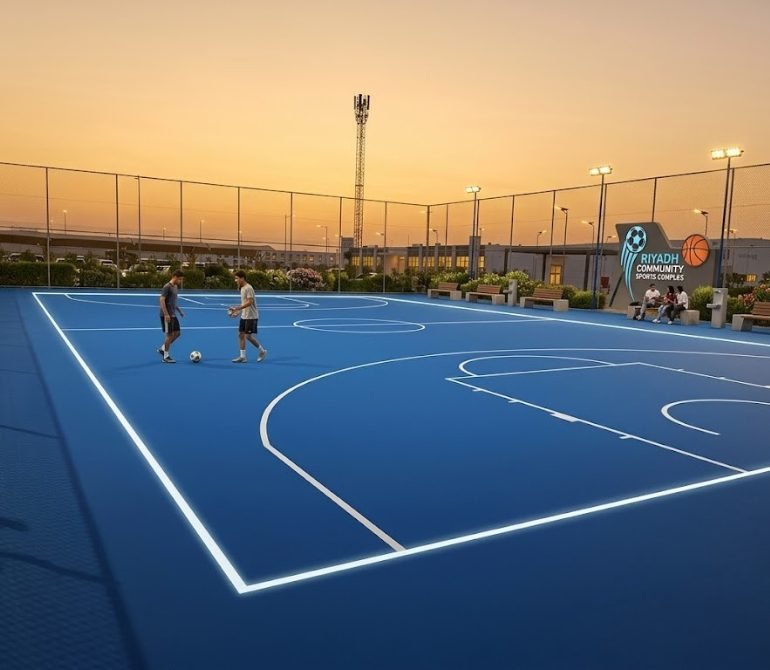
Project archive images illustrate related surfaces and equipment; individual photos do not represent every available system.
Answers before you start your project
Can acrylic be applied to any existing surface?
Not without assessment. The base must be sound, dry and compatible. Existing layers may require removal, and cracks or falls may need correction.
How is a quotation prepared?
Start with location, intended use, photographs or drawings, then determine whether a site visit is needed. The proposal sets out works, materials, quantities, exclusions and a proposed programme for a clear comparison.
How long does installation take?
Duration is determined after reviewing the site, system and quantities. Civil works, procurement, application conditions and curing periods affect the schedule. The proposal sets out a programme rather than a fixed duration for every project.
Does the service include design and equipment?
Design, civil works, surfacing, equipment and lighting can be coordinated within one project. Included and excluded items are explicitly defined in the proposal and contract.
Does every system certify the completed facility?
Material or system certification does not automatically certify the installed facility. If formal approval is required, the standard, tests and assessment body are defined in the agreed scope.
What warranty and aftercare are available?
Terms depend on materials, system type and use conditions. Warranty duration, coverage, exclusions and care obligations are documented in the contract; a suitable maintenance programme can also be agreed.
Can work take place without closing the entire venue?
Phased or zoned work is assessed where safety, access and application requirements allow it. Closure periods and protected areas are agreed before work starts.
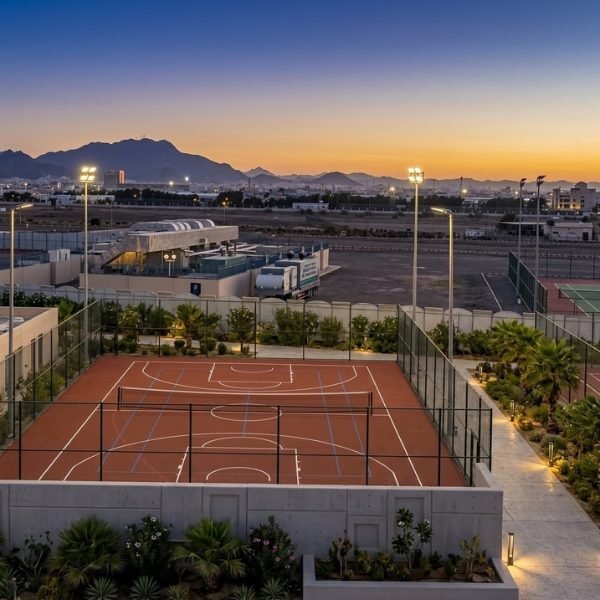
Projects relevant to this service
Services that complete your project
/ CONTACT
Planning a new sports facility?
Start with a free site visit.
Talk to the Play Art team about your court type, area and specifications for a 3D design and detailed quotation.